
Sponsored by

Advertise to 40,849 E-Commerce Businesses
Promote your tool, service or upcoming event - Reach Founders
Good morning!
In today’s newsletter,
Stop paying for 6 tools. One AI does it all
How the Instagram Stories algorithm actually works
Your emails aren't structured as offers. Here's how to fix that.
What brands can learn from Taylor Swift’s community strategy
While You Were Building
1.Google built checkout inside YouTube, Search, Gemini
2.Michaels grabs Joann and Party City's leftovers
3.Rhode carried E.l.f. to 25% growth
Attio - the AI CRM for modern businesses.
This issue takes 2 minutes to read.
Check out our DTC tool stack here
Let’s dive into it👇
Stop Paying for 6 Tools. One AI Does It All

Most e-commerce sellers are running their store across 6 to 8 separate tools — and paying hundreds of dollars a month for the privilege. StoreClaw replaces your entire stack with one autonomous AI engine that monitors competitors, optimizes listings, automates marketing, and tracks real profit across Shopify, Amazon, and beyond.
It doesn't wait for you to ask. It runs 24/7 in the background, so you wake up to a full dashboard instead of a list of things you forgot to check.
Connect your store, and StoreClaw gets to work — no prompts, no complex setup, no six-app stack.
Free to start. No credit card required.
Organic Content
How the Instagram Stories algorithm actually works
Stories aren't built for discovery.
Instagram's own head Adam Mosseri has confirmed it publicly.
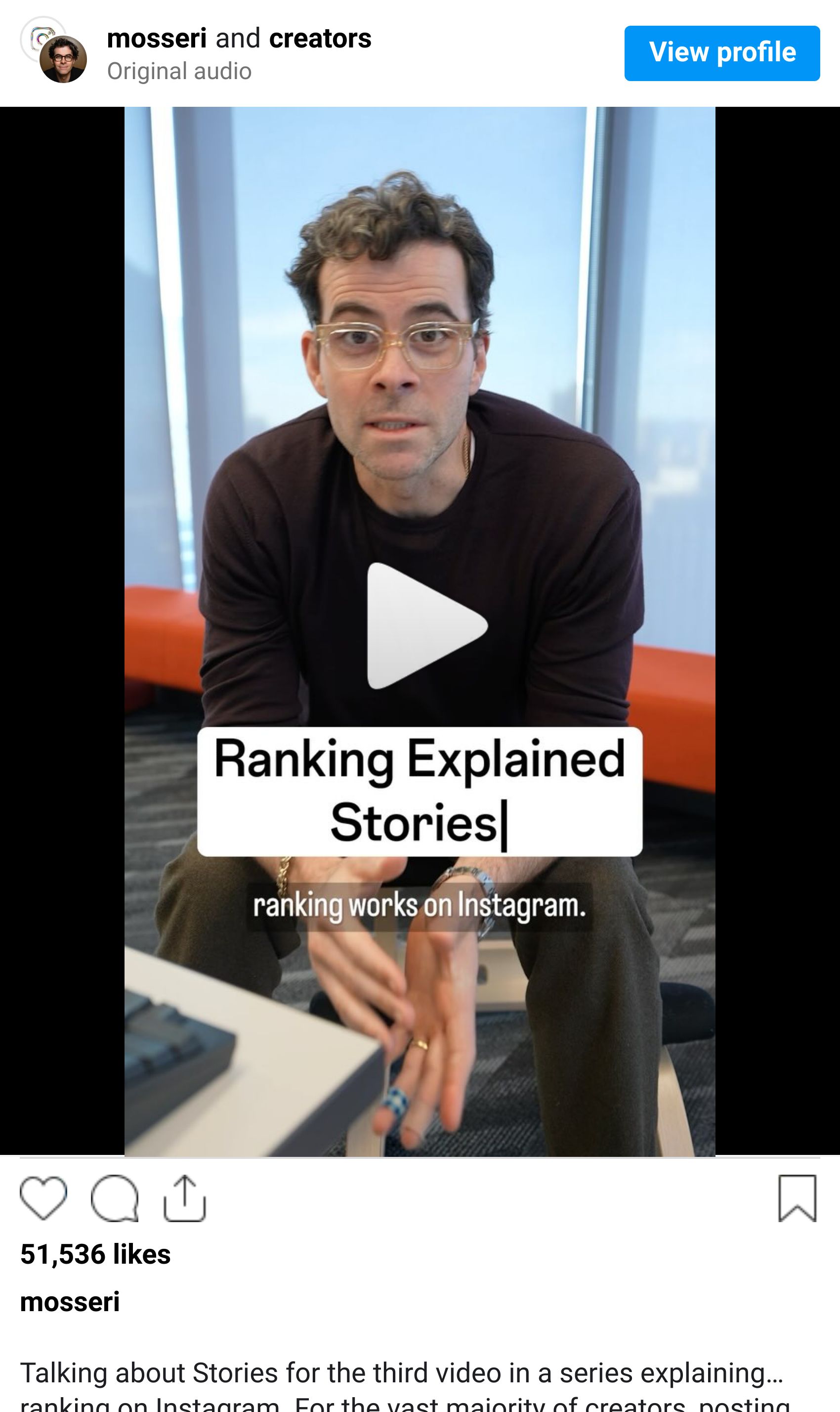
The algorithm prioritizes close friends and family, which means as a brand, you're starting at a disadvantage.
So stop trying to grow through stories. Use them to go deeper with the people who already follow you.
Here's how to work with that.
Post interactive content. Polls, questions, and stickers get people tapping. Every tap tells Instagram this person wants more from you. A question sticker that turns into a Q&A series works well.
Add something new when you reshare a post. Dropping your latest reel into stories with one tap gives followers no reason to click. Pair it with something extra — a behind-the-scenes photo, a quick take you left out of the caption.
Reshare when customers tag you. When someone posts about your product, reshare it with a thank you. It shows people who haven't bought yet that real customers exist — and it signals that tagging you might get them featured, which gets you more tags.
Action Summary:
Add a poll or question sticker to your next story to build engagement signals
When sharing a feed post to stories, add one extra piece of content alongside it
Find one customer tag from this week and reshare it with a reply
Credit: Buffer
Email Marketing
Your emails aren't structured as offers. Here's how to fix that.
Most DTC brands treat email like a press release. A product name, a discount, a link to a collection page.
Alex Hormozi's framework starts from a different place: by the time someone reaches the buy button, the decision should already feel obvious.
Here's how to apply it to your next campaign email.
Lead with the outcome, not the product. Your hero line should describe what the customer becomes. "Get glass skin in 30 days without a 10-step routine" beats "our skincare bundle includes a cleanser, toner, and moisturizer."
Kill skepticism before it starts. Customer photos mid-email, a review count near the CTA, a stat like "2,000 people got results this month" right after the hero line. By the time they reach the buy button, they already believe it works.
Stack bonuses that remove specific objections. Free returns remove fit risk. A size guide removes the "what if it doesn't fit" thought. Early access removes FOMO. Map your top three customer objections and build a bonus for each one.
Action Summary:
Rewrite your hero line to describe a transformation, not a product feature
Add one proof block above the fold in your next email
Map your top three customer objections and attach a bonus to each
Credit: Mark Mei
Pod Bites
What brands can learn from Taylor Swift’s community strategy
In this DTC Daily Podcast, Ken Hughes, known as the King of Customer Experience and author of Tailormaking, broke down how Taylor Swift's playbook can help any founder build a brand people are actually loyal to.
Most brands obsess over product, tech stack, and commerce metrics. Ken's argument is that none of that matters if you haven't built genuine connection with your customers. Taylor Swift figured this out at 16, and she's been doing it consistently for 20 years.
Here's what founders should actually focus on.
Build rituals into the product experience: Taylor Swift was handing out friendship bracelets from the stage at 18. That ritual became a cultural phenomenon decades later. Ask yourself what rituals you're building into how people experience your brand.
Do something worth talking about: If you only meet expectations, you don't become a story. You become forgettable. The only thing customers share is when a brand goes beyond what they expected, like the Virgin Atlantic employee who bought a replacement goldfish for a boy emigrating to America.
Make your customers feel special at scale: Taylor Swift sings directly into individual fan phones mid-concert. That one clip gets posted and reaches millions. Find the small moments in your customer journey where doing something thoughtful for one person becomes a story the whole world hears.
While You Were Building
1.Google built checkout inside YouTube, Search, Gemini
Shoppers can now buy from merchants without leaving Google properties. The funnel collapses from click-through to in-surface conversion, and product feed quality starts doing the work the PDP used to.
via Adweek CPG/Grocery • Read more
2.Michaels grabs Joann and Party City's leftovers
Party supplies grew 60% and 600+ new SKUs landed this year as Michaels backfills assortment Joann and Party City left behind. Category vacuums get filled by whoever stocks fastest.
via Retail Dive • Read more
3.Rhode carried E.l.f. to 25% growth
Hailey Bieber's label drove the parent's full-year result, yet E.l.f. tempered its 2026 outlook. Creator-brand acquisitions can mask softness in the legacy portfolio for exactly one cycle.
via Business of Fashion • Read more
Attio - the AI CRM for modern businesses.

Attio is the AI CRM that keeps you ten steps ahead.
Ask Attio anything. Where should I focus? What deals are at risk? Search, update, and create across your customer data.
Ask more from CRM. Ask Attio.
Have questions or feedback? You can write to kaushal@dtcdailynews.com